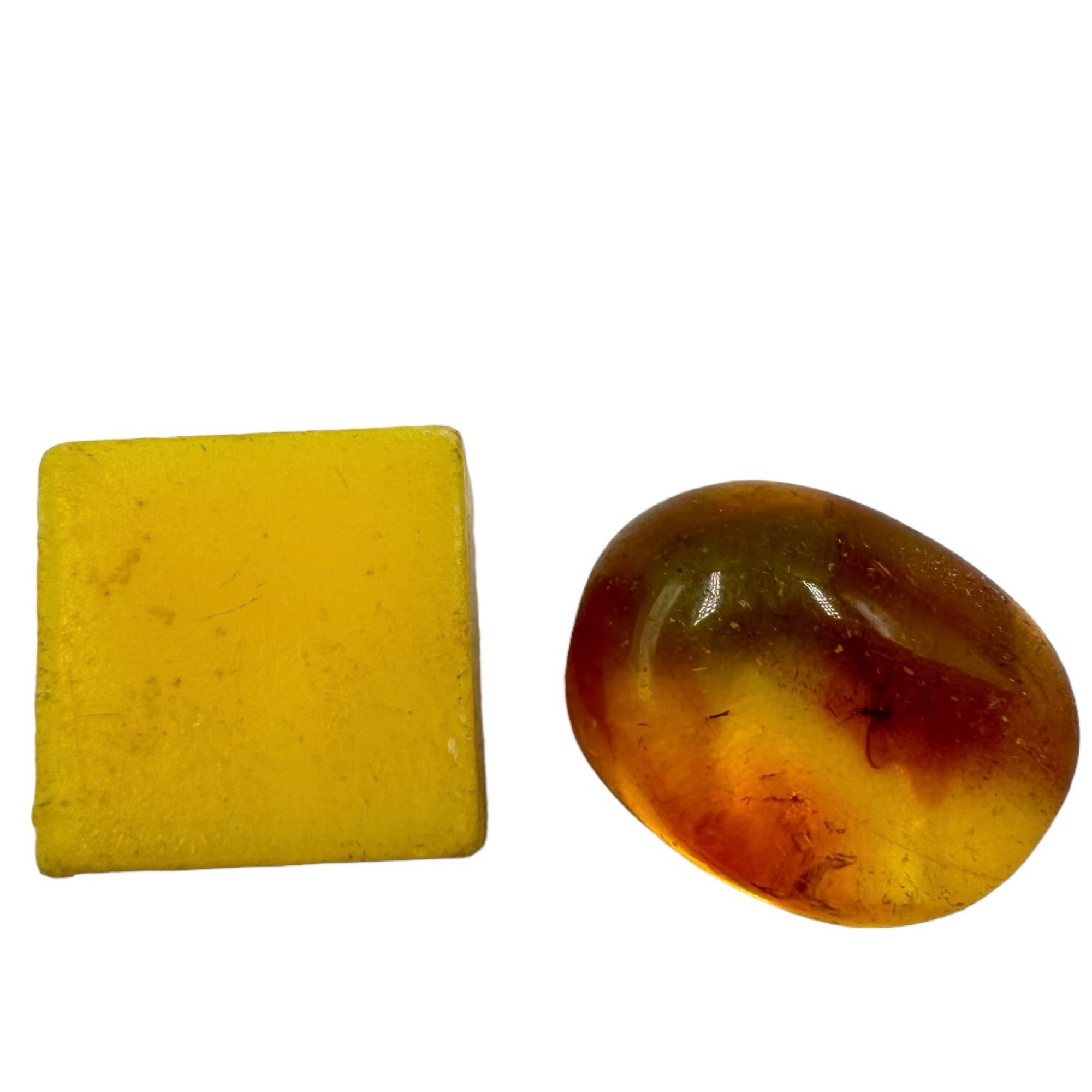
Baltic amber with fossil insect inclusions

Scale cube=1cm showing average size. Insects are likely flies, mosquitoes, but can occasionally be ants, spiders, mites etc.


All of our Fossils are 100% Genuine Specimens & come with a Certificate of Authenticity


Specimen: Baltic Amber with fly Inclusions


Age: Eocene Period –  56 to 33.9 million years ago


Location Found: Baltic Sea


Baltic Amber is older but more common to find than Dominican Amber which is younger but more difficult to source.


Amber Inclusions are unfortunate insects, plants etc. which became entombed in tree resin (not tree sap) millions of years ago. With the inclusion engulfed, the resin slowly hardened through a natural polymerization of the original organic compounds. This hardened material is known as Copal, which preserves the inclusion perfectly. Through time the Copal becomes buried and, over a several million year process, slowly turns into what we know as Amber. Incredibly this process has allowed us to marvel at ancient specimens frozen in time, as if captured only yesterday!


*We would always suggest using a magnifying aid to view your specimen to truly appreciate the inclusions stunning frozen detail.

Login to see prices
SKU: FS1101 Category:

Download Image

Description

Scale cube=1cm showing average size. Insects are likely flies, mosquitoes, but can occasionally be ants, spiders, mites etc.

All of our Fossils are 100% Genuine Specimens & come with a Certificate of Authenticity

Specimen: Baltic Amber with fly Inclusions

Age: Eocene Period –  56 to 33.9 million years ago

Location Found: Baltic Sea

Baltic Amber is older but more common to find than Dominican Amber which is younger but more difficult to source.

Amber Inclusions are unfortunate insects, plants etc. which became entombed in tree resin (not tree sap) millions of years ago. With the inclusion engulfed, the resin slowly hardened through a natural polymerization of the original organic compounds. This hardened material is known as Copal, which preserves the inclusion perfectly. Through time the Copal becomes buried and, over a several million year process, slowly turns into what we know as Amber. Incredibly this process has allowed us to marvel at ancient specimens frozen in time, as if captured only yesterday!

*We would always suggest using a magnifying aid to view your specimen to truly appreciate the inclusions stunning frozen detail.