Description
SIZE : 15-20MM
All of our Fossils are 100% Genuine Specimens & come with a Certificate of Authenticity
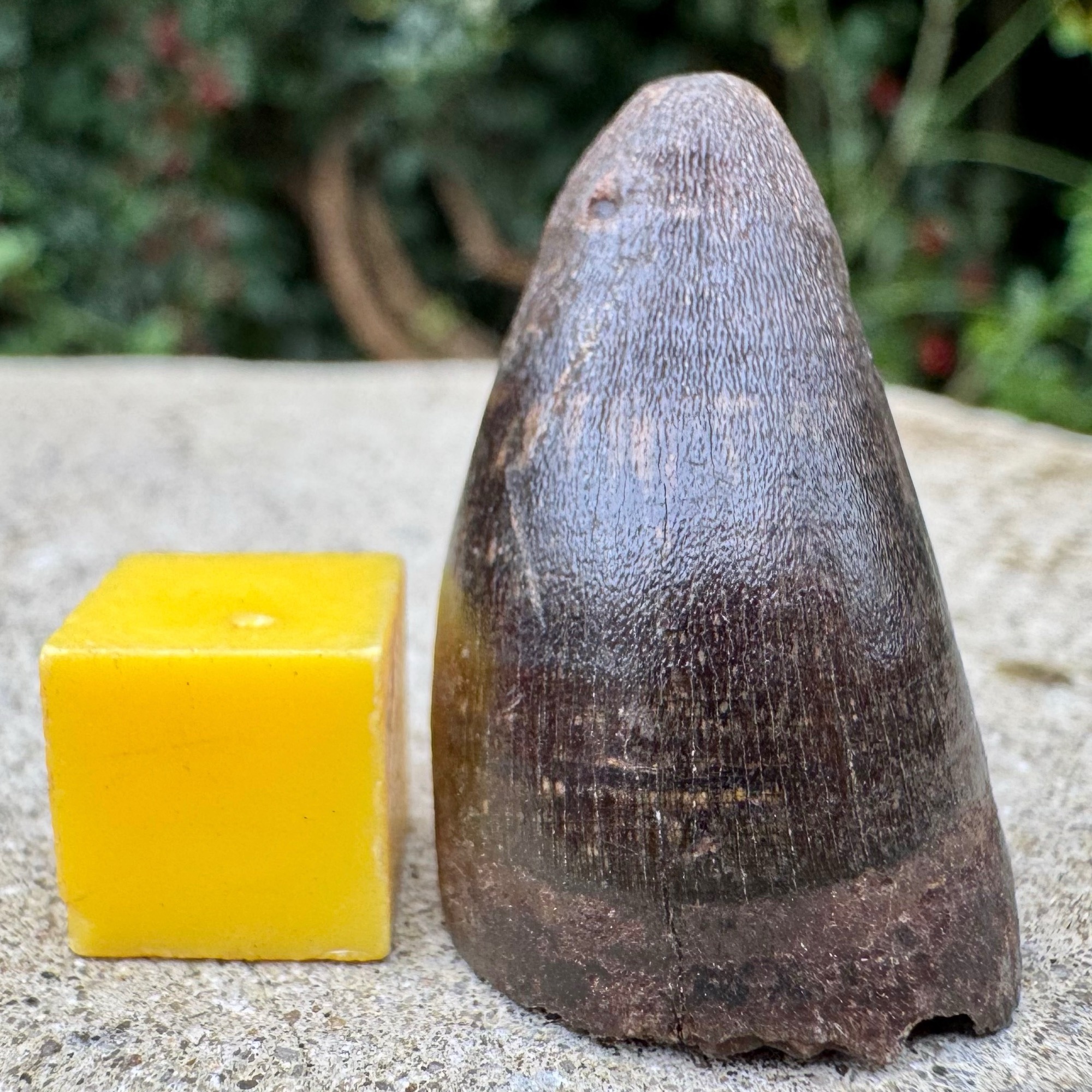
Specimen: Alligator Mississippiensis Tooth
Age: Pleistocene
Location: Florida, USA
Fossilized teeth of Alligator mississippiensis, commonly known as the American alligator, from the USA offer a unique glimpse into the ancient history of this iconic reptile. These fossil teeth, which can be found in various geological formations across the southeastern United States, provide valuable insights into the evolutionary and ecological history of alligators.
The American alligator is a living fossil, having existed virtually unchanged for millions of years. Fossilized teeth of Alligator mississippiensis are commonly discovered in sediments ranging from the Pleistocene to the Holocene epochs, offering a timeline that extends back thousands to millions of years.
These fossil teeth exhibit characteristic features of modern American alligators, featuring a conical shape with serrated edges. The teeth are well-adapted for the alligator’s carnivorous diet, enabling it to grip and puncture prey. The fossilized teeth may vary in size, and their condition often depends on the preservation conditions of the surrounding sediments.
The southeastern United States, particularly areas in Florida, Georgia, and South Carolina, has proven to be a rich source of fossilized Alligator mississippiensis teeth. Alligators inhabit various habitats, including freshwater marshes, swamps, and rivers, and their fossilized teeth are often found in sediments associated with these environments.
The study of fossil alligator teeth contributes to our understanding of the historical distribution and adaptations of these reptiles. It also helps paleontologists reconstruct ancient ecosystems, providing information about the fauna and flora that coexisted with alligators throughout different geological periods.
Fossil enthusiasts, collectors, and researchers appreciate the aesthetic qualities and scientific value of these fossilized teeth. Their discovery serves as a reminder of the enduring presence of alligators in the southeastern landscapes and their evolutionary continuity over geological time.
In summary, fossilized Alligator mississippiensis teeth from the USA offer a tangible link to the ancient past, allowing us to explore the evolutionary history and ecological role of these remarkable reptiles. These fossils not only contribute to scientific research but also captivate the interest of those intrigued by the diverse and dynamic history of life on Earth.
WILL DIFFER TO PHOTO: The image shows an example of the single specimen you will receive. This will be picked from our stock box graded and with a size approximately within the size range indicated. It will not be the same specimen shown in the photo, the colours, shape, size and style may vary as with any natural item. To guarantee the specimen you receive will be representative by that in photo, we would always recommend the Actual as seen version of this item.