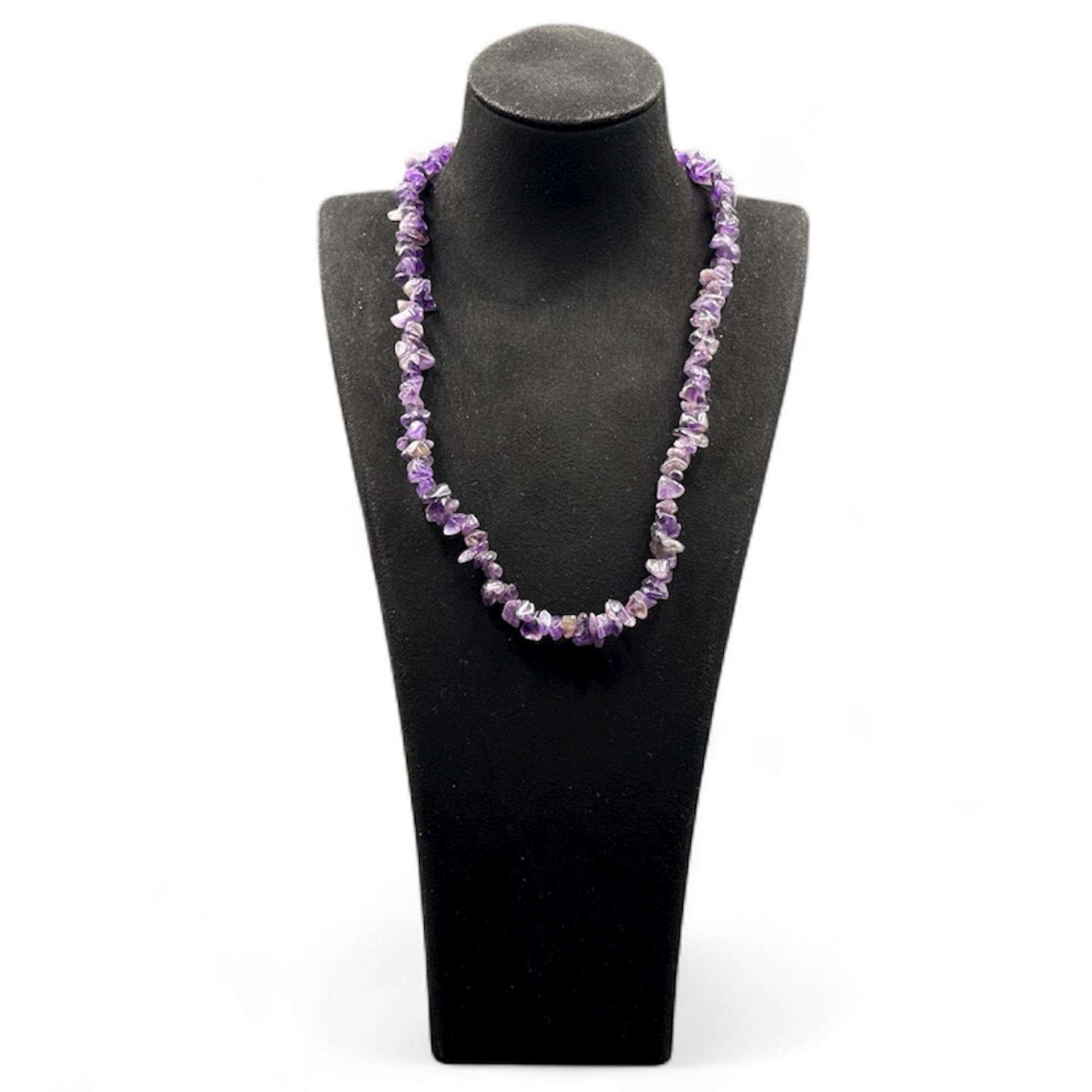
Genuine amethyst necklace 18″

A beautiful Amethyst necklace


Amethyst is a popular and widely recognized semi-precious gemstone known for its stunning purple color. Here are some key points about amethyst:

Composition and Properties

  • Mineral Type: Amethyst is a variety of quartz (silicon dioxide, SiO2).
  • Color: Its color ranges from pale lilac to deep violet. The color is due to the presence of iron and other trace elements within the quartz, which undergoes irradiation.
  • Hardness: Amethyst has a hardness of 7 on the Mohs scale, making it relatively durable and suitable for various types of jewelry.

Historical and Cultural Significance

  • Ancient Civilizations: Amethyst has been used for thousands of years in jewelry and amulets. The ancient Greeks believed it could prevent intoxication, while the Egyptians used it for protection and as a symbol of royalty.
  • Medieval Times: During the Middle Ages, amethyst was considered a symbol of piety and was used to adorn religious artifacts and the attire of high-ranking clergy.

Sources

  • Brazil: The largest source of amethyst, producing high-quality stones in a variety of hues.
  • Uruguay: Known for producing deep, rich purple amethyst.
  • Other Sources: Amethyst can also be found in Russia, Zambia, Madagascar, Sri Lanka, and the United States.

Uses

  • Jewelry: Amethyst is commonly used in rings, necklaces, bracelets, earrings, and brooches. Its beautiful purple color and relative affordability make it a popular choice for all types of jewelry.
  • Decorative Items: It is also used in decorative objects, such as carved figurines, vases, and geodes.
  • Healing and Spiritual Practices: Amethyst is often used in crystal healing practices, meditation, and as a talisman for spiritual protection.

Care

  • Durability: Amethyst is relatively hard and durable but can still be scratched by harder materials. It is also sensitive to prolonged exposure to heat and light, which can cause its color to fade.
  • Cleaning: Clean amethyst with warm, soapy water and a soft brush. Avoid using harsh chemicals or ultrasonic cleaners.

Symbolism and Beliefs

  • Spiritual and Healing Properties: Amethyst is believed to have numerous spiritual and healing properties, including:
  • Promoting calmness, balance, and peace.
  • Enhancing intuition and spiritual awareness.
  • Providing protection against negative energies and psychic attacks.
  • February Birthstone: Amethyst is the traditional birthstone for February, symbolizing clarity, calm, and balance.

Amethyst continues to be cherished for its captivating beauty, historical significance, and reputed metaphysical properties. Its versatility and wide range of hues make it a favorite among gem enthusiasts and jewelry designers alike.

Login to see prices
SKU: JW4005 Category:

Download Image

Description

A beautiful Amethyst necklace


Amethyst is a popular and widely recognized semi-precious gemstone known for its stunning purple color. Here are some key points about amethyst:

Composition and Properties

  • Mineral Type: Amethyst is a variety of quartz (silicon dioxide, SiO2).
  • Color: Its color ranges from pale lilac to deep violet. The color is due to the presence of iron and other trace elements within the quartz, which undergoes irradiation.
  • Hardness: Amethyst has a hardness of 7 on the Mohs scale, making it relatively durable and suitable for various types of jewelry.

Historical and Cultural Significance

  • Ancient Civilizations: Amethyst has been used for thousands of years in jewelry and amulets. The ancient Greeks believed it could prevent intoxication, while the Egyptians used it for protection and as a symbol of royalty.
  • Medieval Times: During the Middle Ages, amethyst was considered a symbol of piety and was used to adorn religious artifacts and the attire of high-ranking clergy.

Sources

  • Brazil: The largest source of amethyst, producing high-quality stones in a variety of hues.
  • Uruguay: Known for producing deep, rich purple amethyst.
  • Other Sources: Amethyst can also be found in Russia, Zambia, Madagascar, Sri Lanka, and the United States.

Uses

  • Jewelry: Amethyst is commonly used in rings, necklaces, bracelets, earrings, and brooches. Its beautiful purple color and relative affordability make it a popular choice for all types of jewelry.
  • Decorative Items: It is also used in decorative objects, such as carved figurines, vases, and geodes.
  • Healing and Spiritual Practices: Amethyst is often used in crystal healing practices, meditation, and as a talisman for spiritual protection.

Care

  • Durability: Amethyst is relatively hard and durable but can still be scratched by harder materials. It is also sensitive to prolonged exposure to heat and light, which can cause its color to fade.
  • Cleaning: Clean amethyst with warm, soapy water and a soft brush. Avoid using harsh chemicals or ultrasonic cleaners.

Symbolism and Beliefs

  • Spiritual and Healing Properties: Amethyst is believed to have numerous spiritual and healing properties, including:
  • Promoting calmness, balance, and peace.
  • Enhancing intuition and spiritual awareness.
  • Providing protection against negative energies and psychic attacks.
  • February Birthstone: Amethyst is the traditional birthstone for February, symbolizing clarity, calm, and balance.

Amethyst continues to be cherished for its captivating beauty, historical significance, and reputed metaphysical properties. Its versatility and wide range of hues make it a favorite among gem enthusiasts and jewelry designers alike.