Description
Hyalite (UV Fluorescent) – Natural Opal Mineral from Bolivia (25–40mm)
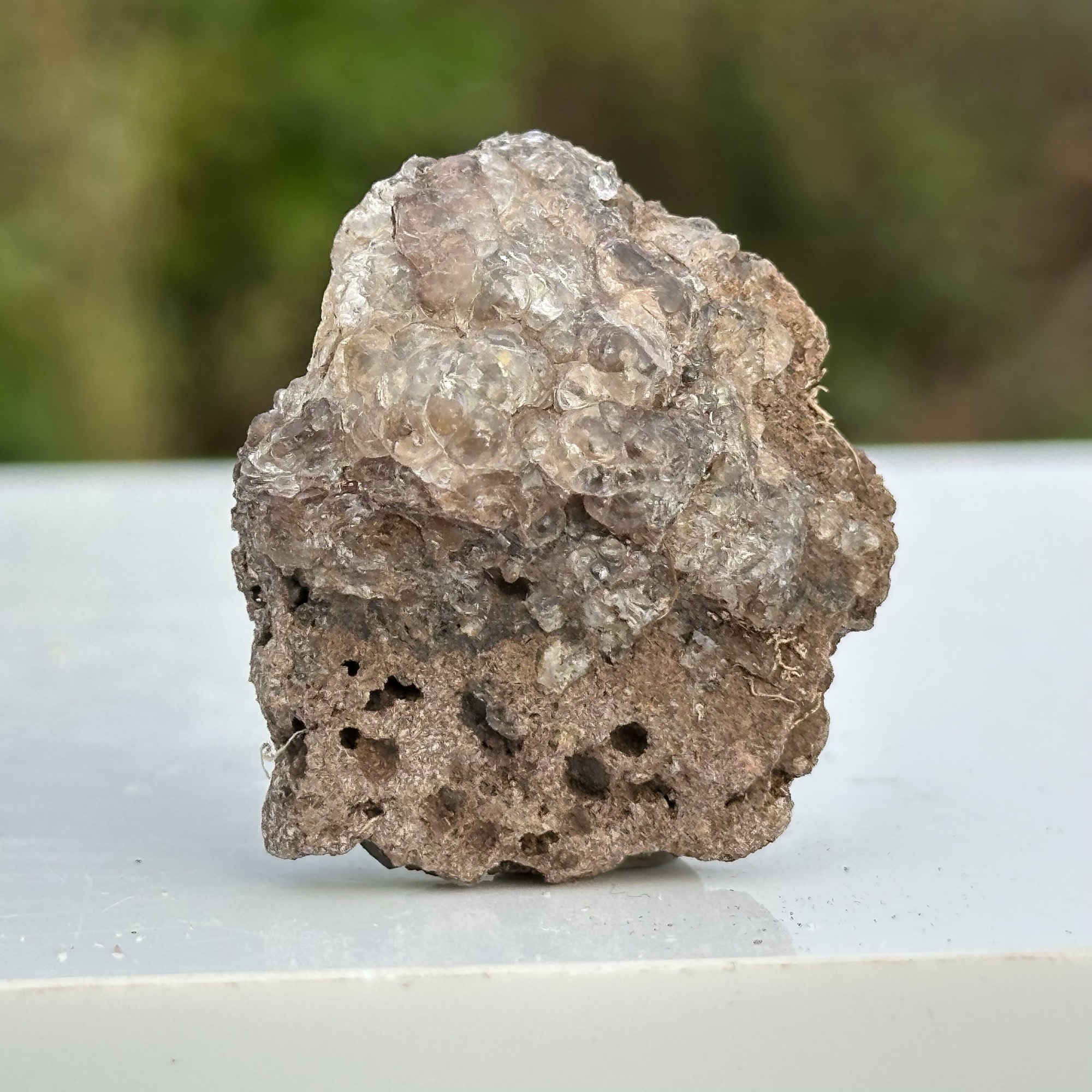
This Hyalite specimen from Bolivia is a genuine natural mineral example, carefully selected for its glassy clarity and distinctive UV fluorescent response. Measuring approximately 25–40mm (full sizing please see photo), each piece is carefully chosen, and the photograph provided shows an example of the actual specimen you will receive. Every item includes a Certificate of Authenticity lifetime guarantee generic card, confirming it as a genuine mineral specimen.
Mineral Type & Scientific Classification
Hyalite is a transparent to translucent variety of opal, classified as a hydrated amorphous form of silica with the chemical composition:
SiO₂·nH₂O
Unlike crystalline quartz, opal lacks a defined crystal structure and is considered amorphous, meaning its silica spheres are arranged without long-range atomic order. Hyalite specifically refers to clear, colourless to slightly milky opal with a glass-like appearance.
Opal has a hardness of approximately 5.5–6.5 on the Mohs scale, making it suitable for careful handling and display. Because it contains water within its structure, it should be stored in stable conditions to preserve its natural integrity.
UV Fluorescence & Optical Characteristics
One of the most striking features of Bolivian hyalite is its strong UV fluorescence. Under ultraviolet light, this mineral can display a vivid green glow. This fluorescence is commonly attributed to trace amounts of uranium incorporated into the silica structure during formation.
Visible features may include:
- Clear to slightly milky appearance
- Glassy (vitreous) lustre
- Botryoidal or globular surface growth
- Smooth rounded formations
- Bright green fluorescence under UV light
In normal lighting, hyalite appears subtle and glassy; under UV light, it becomes dramatically vibrant, making it highly desirable among collectors.
Geological Formation & Bolivian Locality
Hyalite forms in volcanic and hydrothermal environments, where silica-rich fluids precipitate in cavities, fractures, or on rock surfaces. As these silica-bearing solutions cool and solidify, amorphous opal develops in rounded or botryoidal forms.
Bolivia is well known for producing UV-reactive hyalite specimens associated with volcanic rock systems. These environments allow trace elements to become incorporated during silica deposition, resulting in fluorescence under ultraviolet light.
Associated minerals in these volcanic environments may include quartz, chalcedony and other silica-based minerals.
Size, Authenticity & Display
- Mineral: Hyalite (Opal variety)
- Chemical Composition: SiO₂·nH₂O
- Structure: Amorphous
- Origin: Bolivia
- Size: Approximately 25–40mm (please refer to photo for full sizing reference)
- Special Feature: UV Fluorescent
- Authenticity: Includes Certificate of Authenticity lifetime guarantee generic card
This specimen is ideal for mineral collectors, fluorescent mineral enthusiasts, educational geology collections, or as a unique display piece. Its UV reactivity makes it particularly appealing for collectors who enjoy mineral fluorescence.
Collecting & Traditional Associations
Hyalite opal is valued for its clarity, delicate glass-like appearance, and dramatic fluorescent response. Bolivian specimens are especially sought after due to their strong UV reaction and attractive botryoidal forms.
In spiritual traditions, opal is traditionally associated with inspiration and creativity; these interpretations are cultural rather than scientific. From a mineralogical perspective, its appeal lies in its hydrated silica composition, volcanic formation, and striking ultraviolet fluorescence.
A genuine UV fluorescent Hyalite specimen from Bolivia, carefully chosen for quality and supplied with certificate of authenticity, offering eye-catching glow and classic opal mineral character in a collectible 25–40mm size.